What is radiotherapy?
Radiotherapy uses carefully planned radiation to treat cancer and certain non-cancerous conditions. It damages the ability of targeted cells to multiply. The aim may be to cure a disease, reduce the chance of recurrence, control a lesion or relieve symptoms.
How does it work?
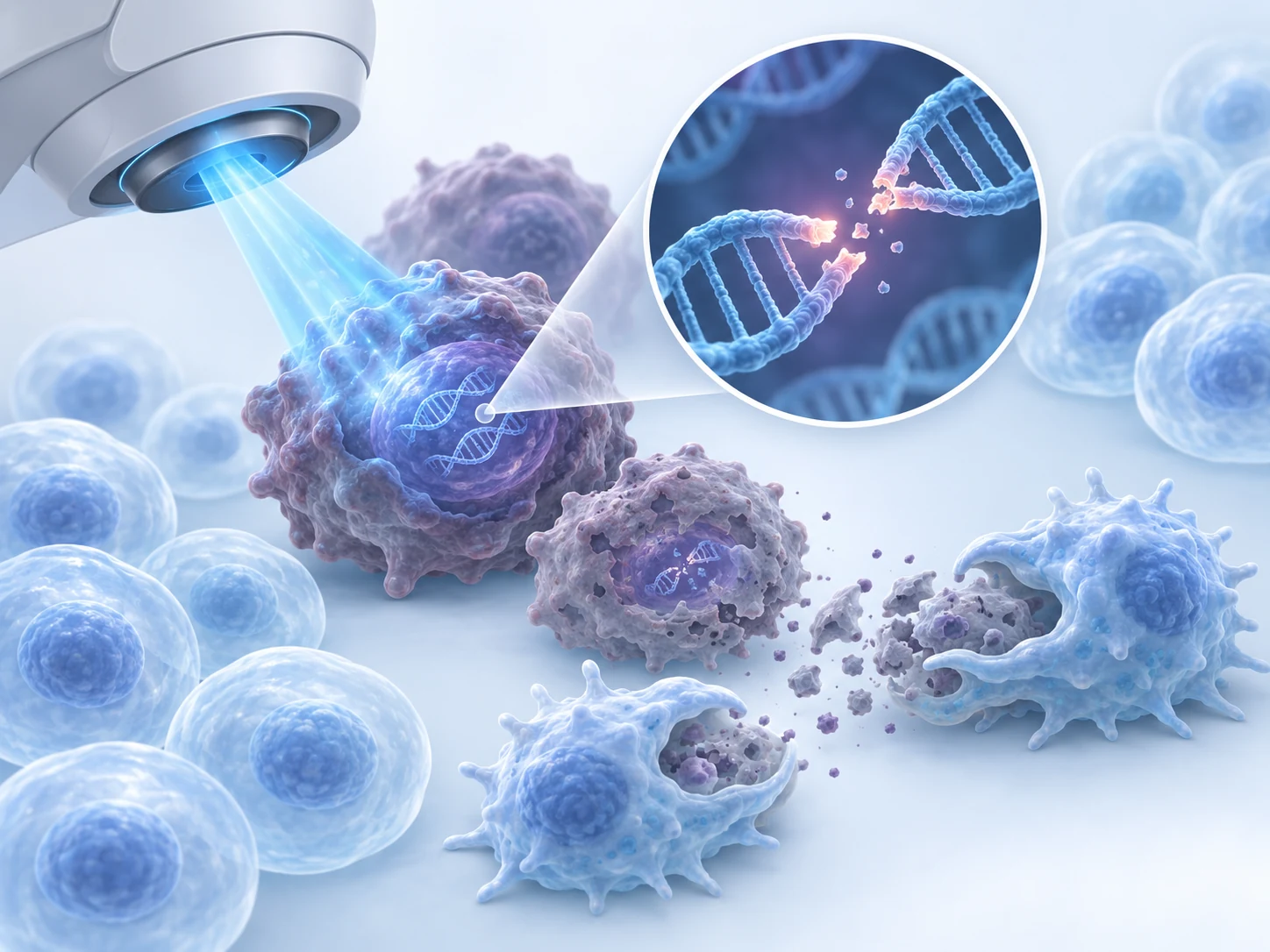
Radiation works by breaking DNA strands inside cells. Because cancer cells often grow more quickly and have less ability to repair their own genetic material, they are more likely to sustain severe damage and lose the ability to keep multiplying.
- DNA damage: when DNA is damaged, the cancer cell may stop dividing and, over time, die.
- Natural clearance: once damaged, these cells are gradually cleared by the body’s own defence mechanisms.
- Protection of normal tissues: nearby healthy tissues may also receive some dose, which is why treatment planning aims to balance benefit and risk and limit exposure to important organs.
Is radiotherapy the same as chemotherapy?
No. External beam radiotherapy acts mainly in a defined body region, whereas most drug treatments circulate throughout the body. They can sometimes be combined.
Will I be radioactive?
External beam radiotherapy does not make you radioactive. You can normally spend time with children, pregnant relatives and other people after a session. Some forms of internal radiation treatment have different safety instructions.
How many sessions are needed?
Some treatments take one session; others take several days or weeks. The number of sessions depends on the diagnosis, the treatment goal, the area involved and safety considerations—not simply on how serious an illness is.
Who plans your radiotherapy?
A specialist physician, medical physicists and radiotherapy professionals work together to define the treatment area, dose, equipment settings and safety checks. Radiotherapy may be used to cure or control cancer, after surgery, or to relieve symptoms; the goal should be explained to you.